
From the University of Maine Cooperative Extension Service:
Late blight devastated crops in 2009
Many farmers and gardeners in Maine saw late blight on their potatoes and tomatoes for the first time in 2009 and experienced firsthand the amount and speed of crop destruction that it can cause. Introduction and widespread distribution of the late blight pathogen into Maine occurred during late June and July, when potato and tomato plants were growing rapidly. Then extended periods of rainy and humid weather hit Maine, completing the disease triangle of pathogen, host, and environment. The results were devastating to the tomato and potato crops in many areas.
Will last year’s late blight affect this year’s garden?
If your garden area is free from plant debris, and your compost pile is free from living plants, last year’s infected tomatoes and potatoes will not affect this year’s garden. While you should rotate vegetable planting areas from year to year, the pathogen that causes late blight does not overwinter in the soil under our conditions.
Click here for the entire UMaine Cooperative Extension article about late blight. If you intend to grow tomatoes and potatoes in 2010, come to Skillin's and we will set you with everything you need to have a great growing year. BUT first check out the information provided by the UMaine Cooperative Extension Service. It is not hard reading and will put your mind at ease!
Mike Skillin
Skillin's Greenhouses
April 20, 2010
Showing posts with label tomato late blight. Show all posts
Showing posts with label tomato late blight. Show all posts
Tuesday, April 20, 2010


Tuesday, March 23, 2010
Garden Talks March 23-Pruning, Damping Off of Indoor Seedlings, Rhubarb, Tomatoes and Late Blight
Hello again,
Good friend Hammon Buck of Plants Unlimited sends out some very nice gardening information and this recent post came to my attention so I thought I would pass it on to you. This is extremely topical and VERY good advice for us gardeners in Skillin's Country. Plants Unlimited is a terrific garden center based in Rockport Maine. Hammon and I talk quite often and I always learn something about gardening and garden center business when we do speak. I hope he benefits some as well. Plants Unlimited is always worth a visit and they can be found at http://www.plants-unlimited.com/ and also at 629 Commercial Street (Route 1) in Rockport ME. Any comments I make are shown in italics:
"Prune many flowering shrubs and trees now while they are still dormant. Be aware that if certain varieties (forsythia, rhodys, lilacs and other spring flower plants) are pruned now, you might lose your spring flowers. The buds on plants are swelling and we prune now because they are full of energy and bounce back quickly. Also, it's so much easier to see the plants form without leaves obscuring your view. First, remove any dead branches or tips, then remove interior branches that cross through the plant - this "opens" the interior up for more light and air. Also remove branches that are rubbing together. Finally, you can prune to improve the symmetry of the tree by removing longer erratic branches. Use sharp pruners, loppers or saws as needed.
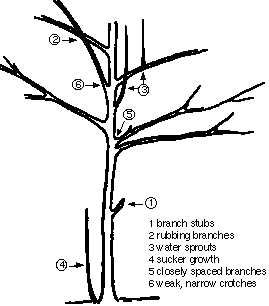
Larger branches on trees often require heavier duty tools than hand pruners. Folding saws, pole pruners or in extreme pruning, chain saws, might be needed. The branches should be cut close to the trunk (but not too close) and on an angle. Larger branches often require an undercut so that the weight of the falling branch does not rip away tree bark when it falls. Also, cut larger branches in sections to avoid weight damage."
Check out our pruning class this Saturday at 10 AM and 2 PM at Skillin's Falmouth! This will be a great class. Call us at 781-3860 for reservations OR contact us at skillins@maine.rr.com!

"It's a great time to prune rose bushes too, while they are still dormant. Remove any damaged or dead canes and crowded or crossed stems. Then, shorten undamaged canes in order to shape the plant. A good general tip for pruning most plants is to select buds that will grow outward (they are on the outside of the stem) and cut the branch slightly above this bud. This forces the plant to grow outward, avoiding growth toward the inside which only leads to rubbing branches and congested plant form. "

I think I had late blight on my tomatoes last year. Will it overwinter in my garden?
Tomatoes will not carry late blight over the winter, because freezing kills the whole plant.

Tomato seed, even from fruit that was infected with late blight, will not carry the pathogen, so no need to worry about the tomatoes left behind in the garden or compost pile.
What about my tomato stakes? Will it carry over on my tomato stakes?
No, late blight will not survive on tomato stakes and cages.
I grew potatoes last year. Can late blight overwinter on potatoes I may have left in the garden?
Potatoes that freeze or fully decompose will not carry the pathogen over winter. However, the biggest threat for overwintered disease in New England is on potatoes that might come up this year. In the spring, inspect last year’s potato plot and any compost or cull piles for volunteer potato plants. If you find potato plants, pull them out and put them in the trash or destroy them. If tubers were infected and survive, then the late blight pathogen could grow upward from the tuber, infecting the stem and producing spores when weather conditions are favorable. These spores could then disperse to other tomato and potato plants.
Is there anything else I can do to prevent late blight this year?
Yes. Late blight is not seedborne (however, it is tuber-borne in potato), so tomato plants started from seed locally (in the Northeast) will be free of the disease. Growing your own tomato transplants from seed or purchasing transplants that were started here in the Northeast from seed will ensure a healthy start to the season for you and local farms.
Also, purchase certified, disease-free seed potato from a reputable source. Seed potato grown in the Northeast is less likely to carry the disease. Examine your seed potatoes and plant only firm, blemish-free tubers.
I have spots on my tomato plants that show up in June or July every year. Could this be late blight?
Probably not. In addition to late blight, each year tomatoes become infected with early blight and Septoria leaf spot, which look very similar to late blight symptoms. If you have problems with early blight each year, consider growing tomato plant varieties that are resistant or tolerant to early blight. Also frequent early sprayings with a natural fungicide like Seranade or a disease preventer product like Vaccinate will help reduce the chances for early blight. Also feed your tomatoes with Tomato Tone by Espoma or liquid feed with Fish and Seaweed Food by Neptune's Harvest. These all natural foods contain good dosages of calcium which helps to prevent early blight, leaf spot and blossom end rot on tomatoes.
Mike Skillin
Skillin's Greenhouses
March 23, 2010
Good friend Hammon Buck of Plants Unlimited sends out some very nice gardening information and this recent post came to my attention so I thought I would pass it on to you. This is extremely topical and VERY good advice for us gardeners in Skillin's Country. Plants Unlimited is a terrific garden center based in Rockport Maine. Hammon and I talk quite often and I always learn something about gardening and garden center business when we do speak. I hope he benefits some as well. Plants Unlimited is always worth a visit and they can be found at http://www.plants-unlimited.com/ and also at 629 Commercial Street (Route 1) in Rockport ME. Any comments I make are shown in italics:
"Prune many flowering shrubs and trees now while they are still dormant. Be aware that if certain varieties (forsythia, rhodys, lilacs and other spring flower plants) are pruned now, you might lose your spring flowers. The buds on plants are swelling and we prune now because they are full of energy and bounce back quickly. Also, it's so much easier to see the plants form without leaves obscuring your view. First, remove any dead branches or tips, then remove interior branches that cross through the plant - this "opens" the interior up for more light and air. Also remove branches that are rubbing together. Finally, you can prune to improve the symmetry of the tree by removing longer erratic branches. Use sharp pruners, loppers or saws as needed.

Larger branches on trees often require heavier duty tools than hand pruners. Folding saws, pole pruners or in extreme pruning, chain saws, might be needed. The branches should be cut close to the trunk (but not too close) and on an angle. Larger branches often require an undercut so that the weight of the falling branch does not rip away tree bark when it falls. Also, cut larger branches in sections to avoid weight damage."
Check out our pruning class this Saturday at 10 AM and 2 PM at Skillin's Falmouth! This will be a great class. Call us at 781-3860 for reservations OR contact us at skillins@maine.rr.com!

"It's a great time to prune rose bushes too, while they are still dormant. Remove any damaged or dead canes and crowded or crossed stems. Then, shorten undamaged canes in order to shape the plant. A good general tip for pruning most plants is to select buds that will grow outward (they are on the outside of the stem) and cut the branch slightly above this bud. This forces the plant to grow outward, avoiding growth toward the inside which only leads to rubbing branches and congested plant form. "

Damping-off of indoor seedlings is a fungus disease that is the downfall of many folks who start their seedlings indoors. Damping-off is the single term used to describe underground, line, or crown rots of seedlings due to unknown causes. The term actually covers several soil borne diseases of plants and seed borne fungi. Damping-off can be prevented by using sterilized, well drained soil and containers with good drainage. Other preventative measures are avoiding overcrowding, over fertilization which cause plants to grow to quickly and too crowded and good air circulation. Do NOT allow your seedlings to become too moist and avoid watering late in the day or on cloudy days when water can't dry off the foliage quickly. Fungicides can be applied as a last resort, but will NOT be needed with good cultural practices. Other natural things you can do are apply milled sphagnum moss or cinnamon on the soil surface after seedlings are sown. Also mist the seedling once of twice a day with water containing either chamomile or clove tea."
"If your rhubarb has become thin and less productive, it's time to rejuvenate it. As soon as you see buds, dig up the plant clump and divide it. Replant these clumps with cow manure or any other high nitrogen fertilizer (I would actually plant the divided clumps with a good dose of Plant Tone by Espoma and then water several times with Neptune's Harvest Fish and Seaweed fertilizer). Continue to feed a few times through the summer with the fertilizer. Do not harvest any this year. This allows the plant to grow vigorously for next year. Generally, you should divide rhubarb every three years or so. "
Late blight caused by Phytophthora infestans – a very destructive and very infectious disease – killed tomato and potato plants in gardens and on commercial farms throughout the eastern U.S. during 2009. Late blight is the same disease that caused the Irish Potato Famine in the 1840s. While late blight occurs at some locations in the Northeast each year, the occurrence of late blight in 2009 was different compared to most seasons. In 2009 infected plants were distributed through large local retail stores throughout the region (Ohio to Maine) during June, and outbreaks were reported over this entire region by early July. Never before had such an extensive distribution of infected plants occurred, especially so early in the season. The early introduction combined with the abnormally cool, wet growing season as well as the exceptionally contagious nature of the disease during cool, rainy, windy weather resulted in a disastrous year for farmers and gardeners. The following are some frequently asked questions about this disease and what home gardeners can do to prevent problems this year.
I think I had late blight on my tomatoes last year. Will it overwinter in my garden?
Tomatoes will not carry late blight over the winter, because freezing kills the whole plant.

(tomato late blight)
Will seed from any tomatoes left in the garden last year carry over the disease?Tomato seed, even from fruit that was infected with late blight, will not carry the pathogen, so no need to worry about the tomatoes left behind in the garden or compost pile.
What about my tomato stakes? Will it carry over on my tomato stakes?
No, late blight will not survive on tomato stakes and cages.
I grew potatoes last year. Can late blight overwinter on potatoes I may have left in the garden?
Potatoes that freeze or fully decompose will not carry the pathogen over winter. However, the biggest threat for overwintered disease in New England is on potatoes that might come up this year. In the spring, inspect last year’s potato plot and any compost or cull piles for volunteer potato plants. If you find potato plants, pull them out and put them in the trash or destroy them. If tubers were infected and survive, then the late blight pathogen could grow upward from the tuber, infecting the stem and producing spores when weather conditions are favorable. These spores could then disperse to other tomato and potato plants.
Is there anything else I can do to prevent late blight this year?
Yes. Late blight is not seedborne (however, it is tuber-borne in potato), so tomato plants started from seed locally (in the Northeast) will be free of the disease. Growing your own tomato transplants from seed or purchasing transplants that were started here in the Northeast from seed will ensure a healthy start to the season for you and local farms.
Also, purchase certified, disease-free seed potato from a reputable source. Seed potato grown in the Northeast is less likely to carry the disease. Examine your seed potatoes and plant only firm, blemish-free tubers.
I have spots on my tomato plants that show up in June or July every year. Could this be late blight?
Probably not. In addition to late blight, each year tomatoes become infected with early blight and Septoria leaf spot, which look very similar to late blight symptoms. If you have problems with early blight each year, consider growing tomato plant varieties that are resistant or tolerant to early blight. Also frequent early sprayings with a natural fungicide like Seranade or a disease preventer product like Vaccinate will help reduce the chances for early blight. Also feed your tomatoes with Tomato Tone by Espoma or liquid feed with Fish and Seaweed Food by Neptune's Harvest. These all natural foods contain good dosages of calcium which helps to prevent early blight, leaf spot and blossom end rot on tomatoes.
Mike Skillin
Skillin's Greenhouses
March 23, 2010
Wednesday, January 13, 2010
Not too Early to Think about Healthy Tomatoes and Potatoes!
Hello again,
The folks at the UMass Cooperative Extension have prepared an excellent guide to the tomato and potato blight that so hampered many of our tomato and potato efforts in 2009.
Here is a great link that is full of information but is also a relatively easy read:
http://www.umassvegetable.org/LateBlightAlertforTomatoandPotato.html
Let us know if you have any questions! We will have CLEAN tomato plants and potato tubers for you this Spring!
Mike Skillin
Skillin's Greenhouses
January 13, 2010
The folks at the UMass Cooperative Extension have prepared an excellent guide to the tomato and potato blight that so hampered many of our tomato and potato efforts in 2009.
Here is a great link that is full of information but is also a relatively easy read:
http://www.umassvegetable.org/LateBlightAlertforTomatoandPotato.html
Let us know if you have any questions! We will have CLEAN tomato plants and potato tubers for you this Spring!
Mike Skillin
Skillin's Greenhouses
January 13, 2010
Monday, September 28, 2009
Late Blight Update--what to do now
Hello again,
The following is an excellent guide to the background of the very damaging late blight that affected our gardens this summer. It is authored by Jim Dill, the Pest Management Specialist for the UMaine Cooperative Extension. I will publish it in its entirety; the article is well written and pretty clear BUT please contact us at info@skillins.com or any of our Skillins locations (contact info found at http://www.skillins.com/) if you have ANY questions. We love to help!
Gardening after Late Blight
James F. Dill PhD, Pest Management Specialist
The gardening season has come to and end and you are already thinking ahead to next year. The garden was a big success except for LATE BLIGHT that wiped out the tomatoes and potatoes. A few tomatoes managed to ripen and the potatoes, if there are any, are still in the ground. Of course, the potato plants have been dead for 2-3 weeks now and the tomato plants certainly need to be given last rites. So, now what!
Let's first look at late blight and what happened in 2009. Late blight
(which helped to create the Irish Potato Famine and the "hungry forties"
in England and throughout Europe in the 1840's) is caused by Phytophthora infestans, a fungus that overwinters on living tomato or potato tissue. The disease first appears as irregular, pale to dark green, water-soaked spots. These spots usually appear on the tips or edges of the leaves. In cool, moist weather or under humid conditions, the spots enlarge rapidly and form brown to purplish-black necrotic areas with wavy, indefinite borders, surrounded by a yellowish-green halo. Also under these conditions, a ring or a surface of white fungal growth may appear at the edge of the lesion on the underside of the leaf, which produces spores that move to other plants and continue the infection.
In 2009, we had perfect late blight weather for the months of June and July. Unfortunately, there was also plenty of spore inoculum around from store purchased tomato plants to cause very early late blight infections in home and commercial gardens.
These spores continued to spread and caused severe outbreaks of late blight in both tomatoes and potatoes in southern and central Maine.Luckily, the weather in August was hot and dry and eventually slowed the outbreak down and brought it to a standstill.
However, that doesn't mean that the disease is gone. It is just lying dormant in those remaining leaf, stem, fruit, and tuber lesions waiting for the cool, wet weather so it can become active again and start sending out new spores for new infections.
So now the big questions come up. What do I do with my dying plants and disgusting fruit and, oh yeah, what about those potato tubers that I still haven't dug yet? What about next year do I have to worry about late blight in my garden again, especially since I had it this year?
Are there any resistant varieties?
Any healthy tomatoes you can salvage can be eaten. However, the USDA doesn't recommend canning tomatoes from late blight infected plants.
There is a concern that the fungus may change the acidity of the tomatoes and therefore affect canning quality. Late Blight is an obligate parasite and thus needs living tissue to survive. Once the infected plant material is dead the fungus will die and will not carry over to the next year.
The removal of living tissue is the key to preventing carry over. The remaining infected and dead plants (both potato and tomato) and infected fruit should be destroyed by burying or sealing in garbage bags and taken to a landfill. Do NOT compost diseased plants or fruit.
Composting is not recommended because many compost piles are not tended properly and are therefore not "cooked" to the proper temperature to kill the pathogens. Next year, if there are any surviving pathogens in the compost or on partially decomposed plants, they may be spread to living plants if the compost is used in the garden.
ALL potato tubers should be dug and carefully washed and graded. If you leave any tubers behind in the ground and if they have a late blight lesion on them, it is possible they could survive the winter in the ground and give rise to a new infection next year. After you have examined your potatoes, discard any damaged ones as was done with the diseased plants.
If you are storing your potatoes for the winter be sure to examine them every couple of weeks. It could be possible that a small lesion or two may have been missed during washing and grading and could give rise to an infection in storage destroying much of your winter supply, just like in the 1840's!
You are now ready for next year's garden. Don't plant any of the saved tubers from your late blight potatoes from this year. You certainly don't want to infect your plants before you get started. Buy and plant certified seed to reduce your risk of planting infected tubers. You can plant your tomatoes and potatoes in the same spot you did last year and you shouldn't have any late blight problems as long as you cleaned up plant debris well. However, it is certainly good practice to rotate the crops in your garden as much as possible. Don't plant the potatoes in the same spot in your garden year after year. Also, do not rotate with related crops. For example, tomatoes should not be planted where your potatoes were last year.
Planting late blight resistant varieties is also an option. The thing to remember about resistance is that it does not mean immunity.Resistance means that the plant can resist to a point, in this case, the late blight fungus. However, if there is a great spore load from many infected plants, then even resistant plants can get the disease although not as badly as the susceptible ones. The other point to remember is that the fungus can mutate and the mutation may be able to overcome the resistance.
There are some resistant potato varieties available to the backyard gardener such as Kennebec, Sebago, Allegany and Chieftain (a red-skinned variety). There are also some resistant tomato varieties, including Ferline, Fantasio, and Legend that are available.
Good gardening!
The following is an excellent guide to the background of the very damaging late blight that affected our gardens this summer. It is authored by Jim Dill, the Pest Management Specialist for the UMaine Cooperative Extension. I will publish it in its entirety; the article is well written and pretty clear BUT please contact us at info@skillins.com or any of our Skillins locations (contact info found at http://www.skillins.com/) if you have ANY questions. We love to help!
Gardening after Late Blight
James F. Dill PhD, Pest Management Specialist
The gardening season has come to and end and you are already thinking ahead to next year. The garden was a big success except for LATE BLIGHT that wiped out the tomatoes and potatoes. A few tomatoes managed to ripen and the potatoes, if there are any, are still in the ground. Of course, the potato plants have been dead for 2-3 weeks now and the tomato plants certainly need to be given last rites. So, now what!
Let's first look at late blight and what happened in 2009. Late blight
(which helped to create the Irish Potato Famine and the "hungry forties"
in England and throughout Europe in the 1840's) is caused by Phytophthora infestans, a fungus that overwinters on living tomato or potato tissue. The disease first appears as irregular, pale to dark green, water-soaked spots. These spots usually appear on the tips or edges of the leaves. In cool, moist weather or under humid conditions, the spots enlarge rapidly and form brown to purplish-black necrotic areas with wavy, indefinite borders, surrounded by a yellowish-green halo. Also under these conditions, a ring or a surface of white fungal growth may appear at the edge of the lesion on the underside of the leaf, which produces spores that move to other plants and continue the infection.
In 2009, we had perfect late blight weather for the months of June and July. Unfortunately, there was also plenty of spore inoculum around from store purchased tomato plants to cause very early late blight infections in home and commercial gardens.
These spores continued to spread and caused severe outbreaks of late blight in both tomatoes and potatoes in southern and central Maine.Luckily, the weather in August was hot and dry and eventually slowed the outbreak down and brought it to a standstill.
However, that doesn't mean that the disease is gone. It is just lying dormant in those remaining leaf, stem, fruit, and tuber lesions waiting for the cool, wet weather so it can become active again and start sending out new spores for new infections.
So now the big questions come up. What do I do with my dying plants and disgusting fruit and, oh yeah, what about those potato tubers that I still haven't dug yet? What about next year do I have to worry about late blight in my garden again, especially since I had it this year?
Are there any resistant varieties?
Any healthy tomatoes you can salvage can be eaten. However, the USDA doesn't recommend canning tomatoes from late blight infected plants.
There is a concern that the fungus may change the acidity of the tomatoes and therefore affect canning quality. Late Blight is an obligate parasite and thus needs living tissue to survive. Once the infected plant material is dead the fungus will die and will not carry over to the next year.
The removal of living tissue is the key to preventing carry over. The remaining infected and dead plants (both potato and tomato) and infected fruit should be destroyed by burying or sealing in garbage bags and taken to a landfill. Do NOT compost diseased plants or fruit.
Composting is not recommended because many compost piles are not tended properly and are therefore not "cooked" to the proper temperature to kill the pathogens. Next year, if there are any surviving pathogens in the compost or on partially decomposed plants, they may be spread to living plants if the compost is used in the garden.
ALL potato tubers should be dug and carefully washed and graded. If you leave any tubers behind in the ground and if they have a late blight lesion on them, it is possible they could survive the winter in the ground and give rise to a new infection next year. After you have examined your potatoes, discard any damaged ones as was done with the diseased plants.
If you are storing your potatoes for the winter be sure to examine them every couple of weeks. It could be possible that a small lesion or two may have been missed during washing and grading and could give rise to an infection in storage destroying much of your winter supply, just like in the 1840's!
You are now ready for next year's garden. Don't plant any of the saved tubers from your late blight potatoes from this year. You certainly don't want to infect your plants before you get started. Buy and plant certified seed to reduce your risk of planting infected tubers. You can plant your tomatoes and potatoes in the same spot you did last year and you shouldn't have any late blight problems as long as you cleaned up plant debris well. However, it is certainly good practice to rotate the crops in your garden as much as possible. Don't plant the potatoes in the same spot in your garden year after year. Also, do not rotate with related crops. For example, tomatoes should not be planted where your potatoes were last year.
Planting late blight resistant varieties is also an option. The thing to remember about resistance is that it does not mean immunity.Resistance means that the plant can resist to a point, in this case, the late blight fungus. However, if there is a great spore load from many infected plants, then even resistant plants can get the disease although not as badly as the susceptible ones. The other point to remember is that the fungus can mutate and the mutation may be able to overcome the resistance.
There are some resistant potato varieties available to the backyard gardener such as Kennebec, Sebago, Allegany and Chieftain (a red-skinned variety). There are also some resistant tomato varieties, including Ferline, Fantasio, and Legend that are available.
Good gardening!
Tuesday, June 30, 2009
Tomato Late Blight
Hello again,
Good gardening friend David K (check out his regular garden blog @ http://gardenmaine.blogspot.com/ forwards this email from the Maine Organic Farmers and Gardeners Association (MOFGA):
"If you are growing tomatoes or potatoes, whether in your garden or on multiple acres, you need to be watching for late blight.
Tomato seedlings sold at a number of large 'big-box' retailers in Maine and the Northeast are apparently infected with the disease, and it's already started to appear around the region....
If your plants are infected, the best control is to pull the plants immediately and seal them in a bag for disposal so the blight spores don't spread further."
Check out this link http://plant-disease.ippc.orst.edu/disease.cfm?RecordID=1084 for a pretty good description and pictures of late blight.
You can always contact us at Skillin's (check http://www.skillins.com/ for contact numbers or info@skillins.com) with any questions!
Mike Skillin
Skillin's Greenhouses
June 30, 2009
Good gardening friend David K (check out his regular garden blog @ http://gardenmaine.blogspot.com/ forwards this email from the Maine Organic Farmers and Gardeners Association (MOFGA):
"If you are growing tomatoes or potatoes, whether in your garden or on multiple acres, you need to be watching for late blight.
Tomato seedlings sold at a number of large 'big-box' retailers in Maine and the Northeast are apparently infected with the disease, and it's already started to appear around the region....
If your plants are infected, the best control is to pull the plants immediately and seal them in a bag for disposal so the blight spores don't spread further."
Check out this link http://plant-disease.ippc.orst.edu/disease.cfm?RecordID=1084 for a pretty good description and pictures of late blight.
You can always contact us at Skillin's (check http://www.skillins.com/ for contact numbers or info@skillins.com) with any questions!
Mike Skillin
Skillin's Greenhouses
June 30, 2009
Tuesday, May 19, 2009
Garden Talks May 19

Hello again,
Gardening is happening in Skillin's Country where we are all about teaching you to Grow A Greener Garden!
One of the prettiest plants in my yard is the Brunnera Macrophylla Alkanet a shade tolerant perennial with beautiful blue flowers right now. I borrowed the picture above from the ubcbotanicalgarden.com site found through Google images. The plant is a beautiful medium green shade with some gorgeous contrasting blue flowers. We sell it here at Skillin's and I highly recommend it for shady spots.
Yesterday morning I finally installed my Mole Mover tubes to protect my vegetables and flowers. These tubes are the best battle I know of against pesky and voracious woodchucks. Those big woodchucks get hungry and they love tender vegetable, annual and perennial plants. Come see us for the BEST protection. The Mole Mover tubes work great. They run on C batteries (in the new models the C batteries can last 18 months, a big improvement over the old models, and this is a little better for the environment). The tubes need to be plunged into the ground within 30 feet of the woodchucks holes--not necessarily in or near the garden. Once battery powered and in the ground the tubes emit a consistent annoying sound every 25 to 30 seconds. This sound can be heard underground only (and in the woodchuck's den) and it slowly but surely drives the woodchuck beserk until he and the family leave the area. Once plunged into the ground give the tubes a week or two and then the woodchucks will be gone. A few years back now I had some fat woodchucks that almost drove me away from gardening . They ate nearly all my perennials, annuals and vegetables. I tried fencing, hot pepper wax, throwing rocks, gasoline rags in the holes, filling the holes, fake owls, motion activated water throwers, rotenone garden dust, coyote urine, fox urine, fencing again and praying and finally the praying led me to the Mole Mover tubes! They worked and now I garden happily! We sell them here at Skillin's!
I had a question today about pruning lilacs--it is fine to cut the flowers now and enjoy them indoors. Lilacs can be pruned freely for up to about 2 or 3 weeks after they are finished flowering and then should not be pruned after that so as not to disturb next year's wood that they will flower on. So enjoy those lilacs now and prune soon!
Planting tomatoes? Plant with Tomato Tone by Espoma or Tomato Maker. During the garden season water feed your tomatoes with Fish & Seaweed fertilizer by Neptune's Harvest; these natural fertilizers contain good doses of calcium which help to strengthen your tomato plants and fruit. This helps to alleviate Blossom End Rot a common problem for tomatoes in our cool and often wet climate.
Also, give your tomatoes plenty of SPACE. Most problems I see with tomatoes (leaf blights, lack of fruit) happens because not enough light and air circulation can get to the tomato plants. And last but not least tomato plants love monthly applications of Messenger--if you do nothing at all give your Tomatoes Messenger!!! (we talk about Messenger in some detail in the posts of May 18 and May 15).
Mike Skillin
Skillin's Greenhouses
May 19, 2009
Subscribe to:
Posts (Atom)